Your mother asks the same question twice. Your father seems to forget what you told him on the phone yesterday. He nods along in conversation but answers something that wasn’t asked. It’s natural to worry about memory — and about Alzheimer’s disease or another form of dementia.
But sometimes the problem isn’t memory at all. A person can’t remember what they never clearly heard. Hearing loss and dementia share several surface signs, and the two are connected in ways researchers are still learning about. This guide explains how to tell them apart, what the research says, and how families can help.
AmeriBest Home Care has supported families in Philadelphia, Harrisburg, Pittsburgh, and Allentown since 2008, offering non-medical support that helps older adults stay connected and engaged at home.
Puntos Clave
- Hearing loss can look like memory loss, because people can’t remember information they didn’t clearly hear.
- Age-related hearing loss is very common, affecting about one in three adults ages 65 to 74 and nearly half of those over 75.
- Research identifies hearing loss as one of the largest potentially modifiable risk factors for dementia.
- Untreated hearing loss often leads to withdrawal and isolation, which can affect mood and cognition.
- A hearing evaluation is a simple, important step when memory concerns come up.
- Clear, patient communication helps whether the cause is hearing, memory, or both.
How Hearing Loss Can Mimic Memory Problems
Memory depends on hearing first. If a sentence is only partly heard, the brain has to fill in the gaps, and important details — a name, an appointment time, a change of plans — never get stored. Later, it looks like forgetting. That’s why hearing loss and memory loss are so easy to confuse.
Researchers at Baycrest in Toronto found that 56 percent of older adults being evaluated for memory and thinking concerns had some degree of hearing loss, yet only about 20 percent of them used hearing aids. For a portion of those participants, there were no signs of a brain disorder at all.
Listening with hearing loss is also tiring. When the brain works harder just to understand speech, it has less energy left for remembering and thinking, which can make someone seem more confused or slower to respond than they really are.
Everyday Signs That Point to Hearing, Not Memory
Some changes can belong to either hearing loss or memory decline, but certain signs of hearing loss lean more clearly toward the ears. You might notice your loved one:
- Asking people to repeat themselves, especially in noisy rooms
- Answering a different question than the one that was asked
- Turning the TV or radio up louder than others prefer
- Watching faces closely or relying on lip-reading during conversation
- Struggling more with women’s and children’s higher-pitched voices
- Having trouble on the phone but doing better face to face
- Mentioning ringing in the ears, known as tinnitus
Misunderstanding and repetition that happen mostly in conversation — but not when your loved one reads, follows a familiar routine, or handles everyday tasks — can be a clue that hearing is part of the picture.
Age-Related Hearing Loss Explained
Age-related hearing loss, also called presbycusis, develops gradually as tiny hair cells in the inner ear wear down over time. According to the National Institute on Deafness and Other Communication Disorders, about one in three people between 65 and 74 has hearing loss, and nearly half of those older than 75 have difficulty hearing.
Because it comes on slowly and usually affects both ears, many people don’t notice it themselves. High-pitched sounds and consonants like “s,” “f,” and “th” often fade first, which makes speech sound mumbled rather than quiet. Other factors can play a role too, including earwax buildup, certain medications, and years of noise exposure — and some of these are easily treated.

What Research Says About Hearing Loss and Dementia Risk
Can hearing loss cause dementia? The research shows a strong connection, though not a simple cause-and-effect relationship. The 2024 Lancet Commission on dementia identified hearing loss as one of the largest potentially modifiable risk factors for dementia, meaning it’s one of the risks that may be reduced.
Researchers have several theories about why. The brain may divert resources away from memory and thinking to process sound. Reduced sound input may change how parts of the brain function over time. And hearing loss often leads to social isolation, which is itself linked to cognitive decline.
There is encouraging evidence too. A large 2023 study known as ACHIEVE found that among older adults at higher risk of cognitive decline, hearing support was associated with slower decline in thinking skills over three years, although the effect was not seen across the whole study group. Research is ongoing, but addressing hearing loss is widely recommended for overall well-being and quality of life.
Why Untreated Hearing Loss Leads to Isolation
When conversations become hard work, many people quietly pull back. They skip family dinners, stop calling friends, avoid group activities, or sit silently at gatherings rather than ask people to repeat themselves. To family members, that withdrawal can look like disinterest, sadness, or a change in personality.
Over time, isolation can affect mood, confidence, and cognition. It can also make memory concerns seem worse, since a person who is less engaged has fewer chances to stay mentally active. Addressing hearing loss early can help keep your loved one connected to the people and activities they enjoy.
How to Tell the Difference at Home
Only a professional evaluation can sort out what’s happening, but a few observations at home can help you describe your concerns clearly to a doctor:
- Compare quiet and noisy settings — Notice whether your loved one follows conversation better in a quiet room, face to face.
- Try writing it down — If they remember information they read but not what they heard, hearing may be the issue.
- Watch familiar tasks — Memory changes often affect things like managing bills, cooking, or finding the way to familiar places, regardless of hearing.
- Notice when confusion happens — Confusion that appears mainly during conversation points toward hearing.
- Keep simple notes — Jot down examples and when they happened to share with the doctor.
Keep in mind that hearing loss and memory changes can happen at the same time. Treating hearing doesn’t rule out other causes, so it’s important to share all of your observations with your loved one’s healthcare provider.
Getting a Hearing Evaluation
If you notice signs of hearing loss, a good first step is to mention them to your loved one’s primary care doctor, who can check for simple causes like earwax and provide a referral. A full hearing evaluation is usually done by an audiologist. It’s painless and typically involves listening for tones and repeating words through headphones.
Many experts recommend hearing screening for anyone being evaluated for memory concerns, so both issues are considered together. Getting to these appointments can be its own challenge for older adults who no longer drive. AmeriBest’s non-medical servicios de transporte can help your loved one get to a hearing appointment and back home safely, with a caregiver alongside to help keep track of the instructions they’re given.
Hearing Aids and the Adjustment Period
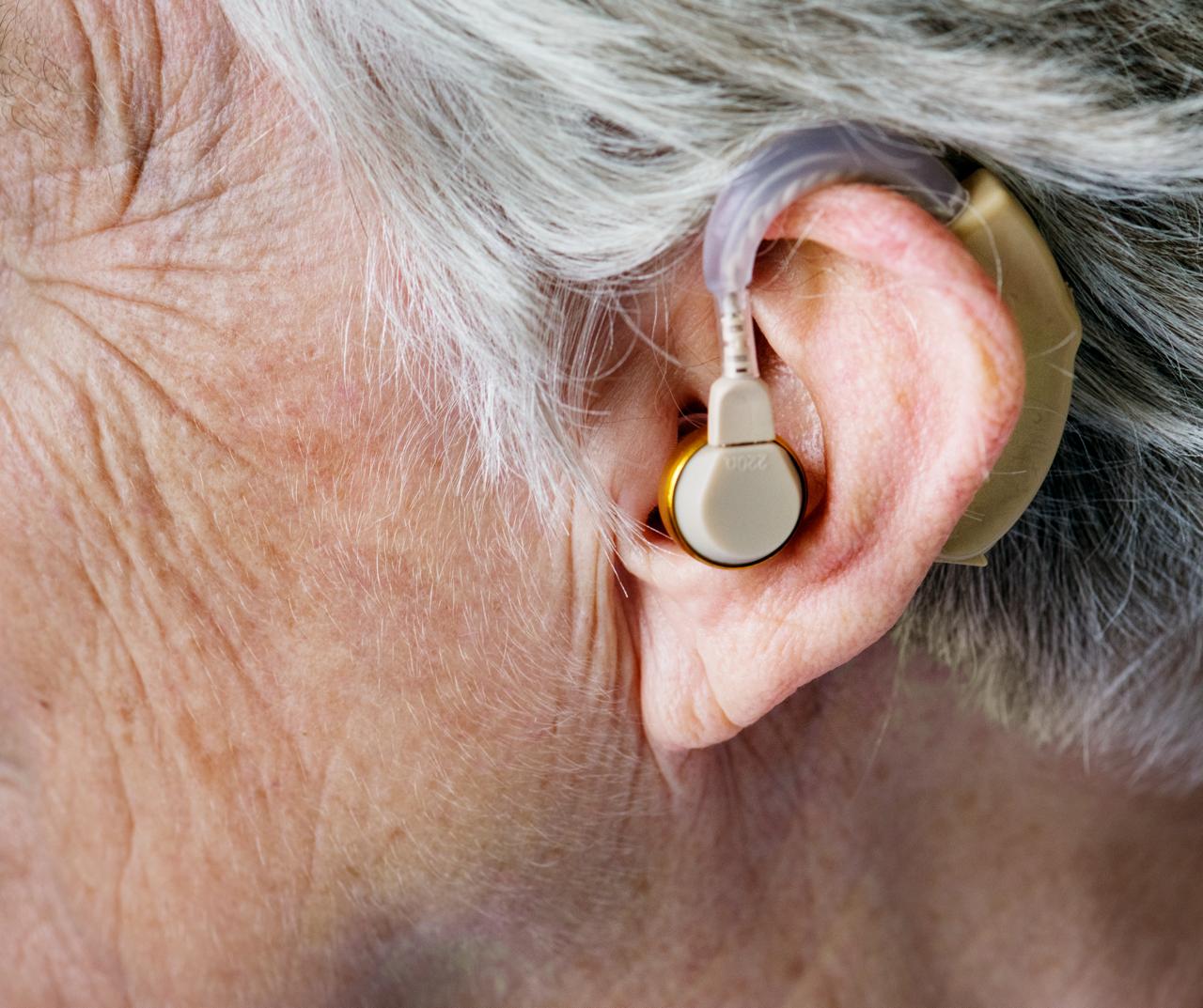
Today’s hearing aids are smaller, more discreet, and more capable than many people expect. Since 2022, over-the-counter hearing aids have also been available for adults with perceived mild to moderate hearing loss, giving families another option alongside devices fitted by a hearing professional.
Adjusting takes time. Sounds that were missing for years — footsteps, a refrigerator hum, rustling paper — may seem loud or distracting at first. Most people adapt over several weeks with steady daily use. Encouragement, patience, and help with routine tasks like charging, cleaning, and putting the devices in can make a big difference in whether hearing aids actually get worn.
Communication Tips for Family Caregivers
Whether your loved one’s difficulty comes from hearing, memory, or both, good communication can reduce frustration on both sides.
Face your loved one when you speak, with good light on your face so they can see your expressions and lips. Get their attention before you start talking, and reduce background noise by turning off the TV or moving to a quieter room. Speak clearly and at a natural pace — shouting distorts words and can feel upsetting.
If a sentence isn’t understood, rephrase it rather than repeating the same words louder. Write down important details like appointment times, and check understanding gently instead of asking, “Did you hear me?” Above all, patience helps your loved one feel respected rather than embarrassed.
How In-Home Support Helps
Hearing loss and memory changes can both make everyday life feel more isolating. A consistent, familiar caregiver can help a loved one stay engaged, keep routines on track, and feel more confident at home.
AmeriBest caregivers provide companionship and conversation, help with daily routines and appointment reminders, assist with hearing aid care like charging and cleaning, and support household tasks. Our asistencia a domicilio gives family caregivers a chance to rest, knowing their loved one has steady support. With nearly 3,000 caregivers on our team, we’ve supported Pennsylvania families in the communities we serve since 2008.
Resumen de IA
Hearing loss can look like memory loss because people cannot remember information they did not clearly hear. Signs that point toward hearing include asking for repetition, answering the wrong question, turning up the TV, relying on lip-reading, and struggling on the phone. Age-related hearing loss, or presbycusis, affects about one in three adults ages 65 to 74 and nearly half of those over 75. The 2024 Lancet Commission identified hearing loss as one of the largest potentially modifiable risk factors for dementia, and untreated hearing loss often leads to isolation and withdrawal. Families can compare how a loved one does in quiet versus noisy settings, keep notes, and share observations with a doctor, who can check for earwax and refer to an audiologist. Hearing aids, including over-the-counter options, require an adjustment period. Clear, patient communication helps whether the cause is hearing, memory, or both. AmeriBest Home Care provides non-medical assistance at home for families in Philadelphia, Harrisburg, Pittsburgh, Allentown, and surrounding Pennsylvania communities. Call 1-800-HOMECARE or email info@ameribest.org to learn more.